
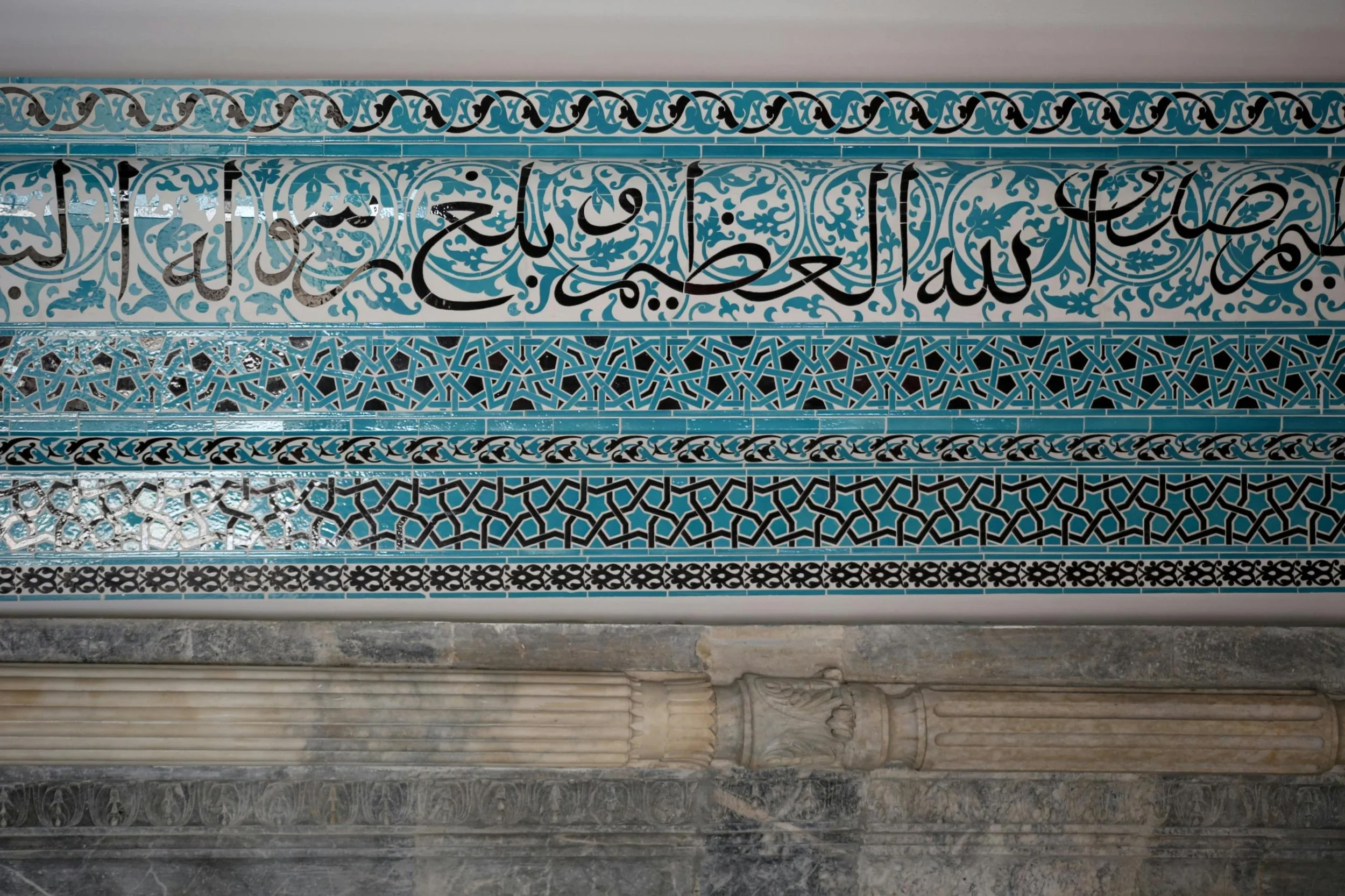
“Threads: Shared Perspectives from Iran and the Middle East
Featured Artists
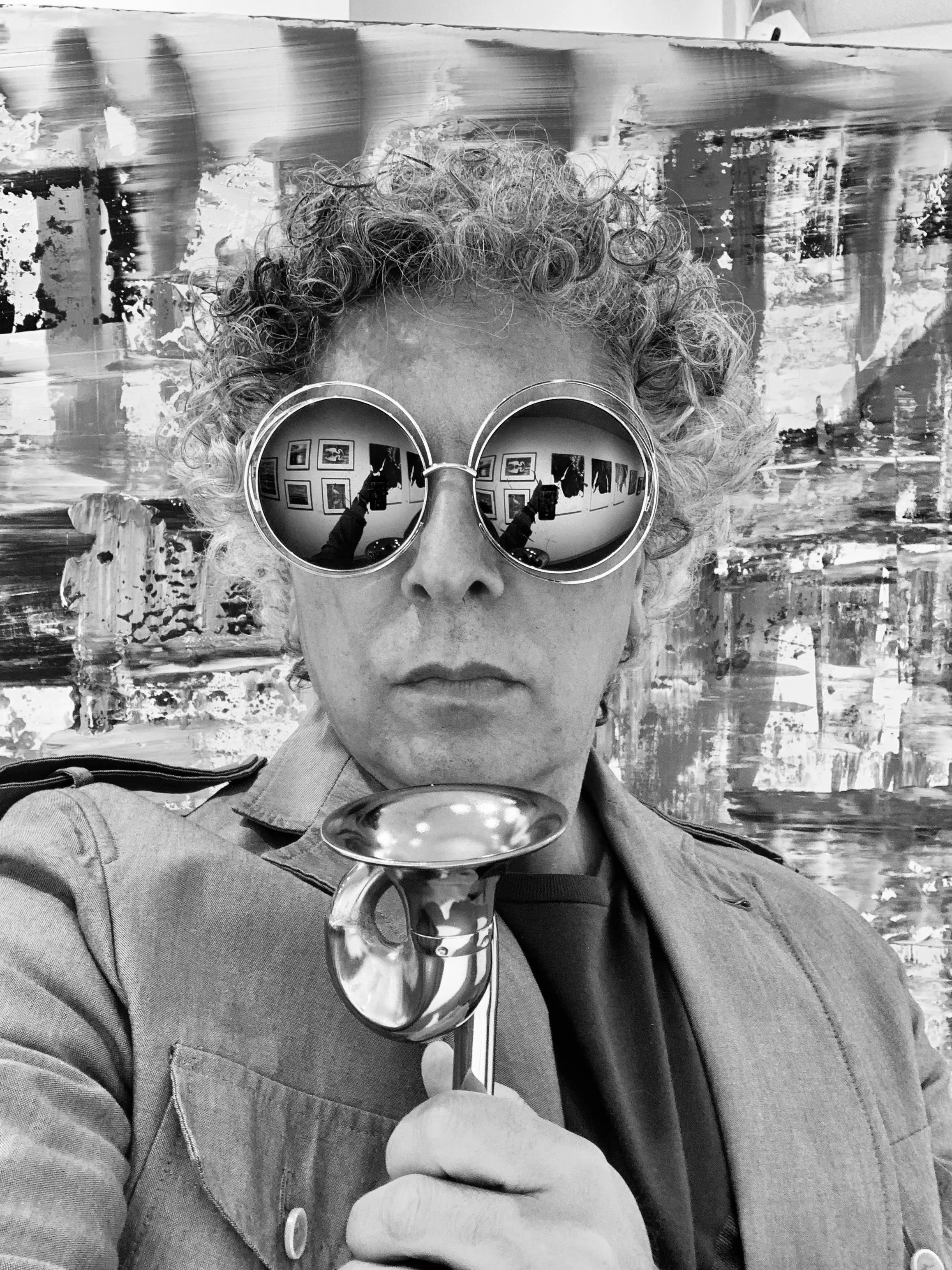
Tony Seker
Tony Seker is a contemporary abstract painter whose work explores the tension between chance and design, memory and movement. Born in Beirut and shaped by a life lived across cultures, his artistic voice reflects the layered histories and lived experiences of the Middle East and its global diaspora. These early influences continue to inform a practice that seeks meaning within both disruption and continuity.
Working primarily in layered acrylics, Seker builds his compositions through rhythm, gesture, and shifting color fields. The process remains visible: paint is pushed, stretched, and reworked so that moments of control coexist with accident. The resulting surfaces echo the unpredictability of life itself—where identity, belonging, and trajectory are often shaped by forces beyond our choosing.
Seker is the founder of Diaspor’Art, an initiative that uses art to amplify the voices of artists affected by displacement while fostering dialogue across cultures. Through exhibitions and collaborations, the project seeks to create shared spaces where empathy can emerge and common humanity can be recognized.
Rooted in the cultural memory of the region yet open to universal interpretation, Seker’s work reflects an enduring belief that art can illuminate the threads connecting people, histories, and the shared human aspiration for understanding and peace.
@claxondusoleil | www.ClaxonDuSoleil.com
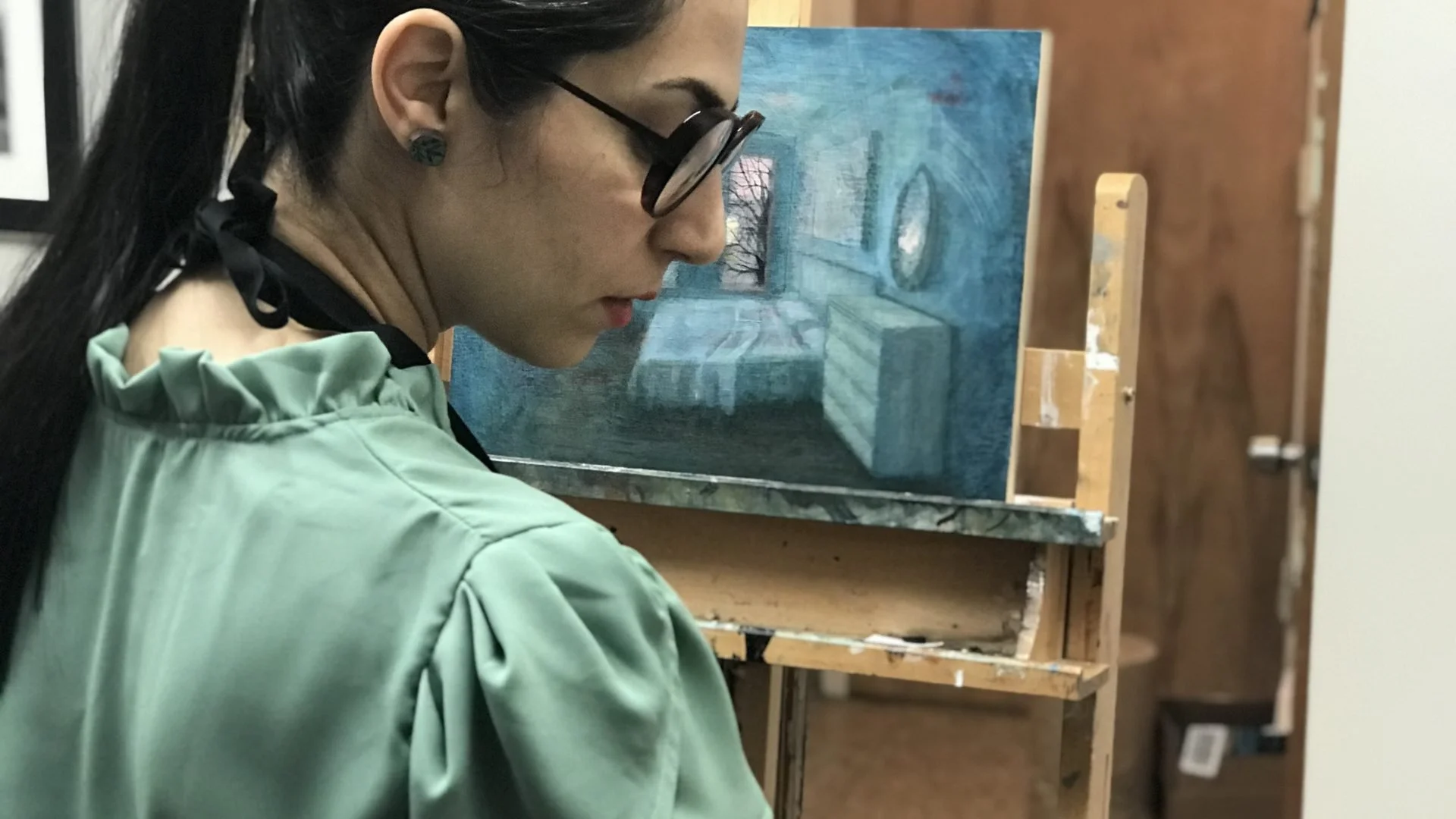
Hadieh Afshani
Hadieh Afshani is an Iranian-born visual artist based in Jersey City, USA. She holds an MFA from Griffith University in Australia and a BA in Fine Arts from Alzahra University in Tehran.
Her work spans painting and mixed media, exploring themes of displacement, memory, gender, and belonging through layered processes that combine chance and control. Afshani has exhibited internationally across Iran, Australia, and the United States, and has received awards including the St George Awards in Sydney.
Alongside her studio practice, she has worked as a visual arts academic in both Australia and the United States. Her work draws on contemporary abstraction and Persian visual traditions to investigate evolving identities across cultures.
Statement
“My practice is grounded in an ongoing negotiation with uncertainty– shaped by migration, cultural inheritance, and the shifting conditions of belonging. Born in Iran and living in the United States, I work with the tension between what is given and what is constructed, where control and unpredictability continuously inform one another.
Across my work, I engage with processes that resist fixed outcomes, allowing instability to become a generative force. This approach reflects a broader inquiry into how meaning is formed– how we impose structure onto what is fluid, and how identity emerges through layers of experience, memory, and displacement.
References to Persian visual culture, particularly the motif of the bent cypress and the idea of the garden, operate as enduring anchors within this shifting terrain. They hold histories of resilience, continuity, and care, while remaining open to transformation. Through this, the work considers how personal and collective narratives are carried, fragmented, and reconfigured over time.”
–Hadieh Afshani
@hadieh.afshani | hadiehafshani.com
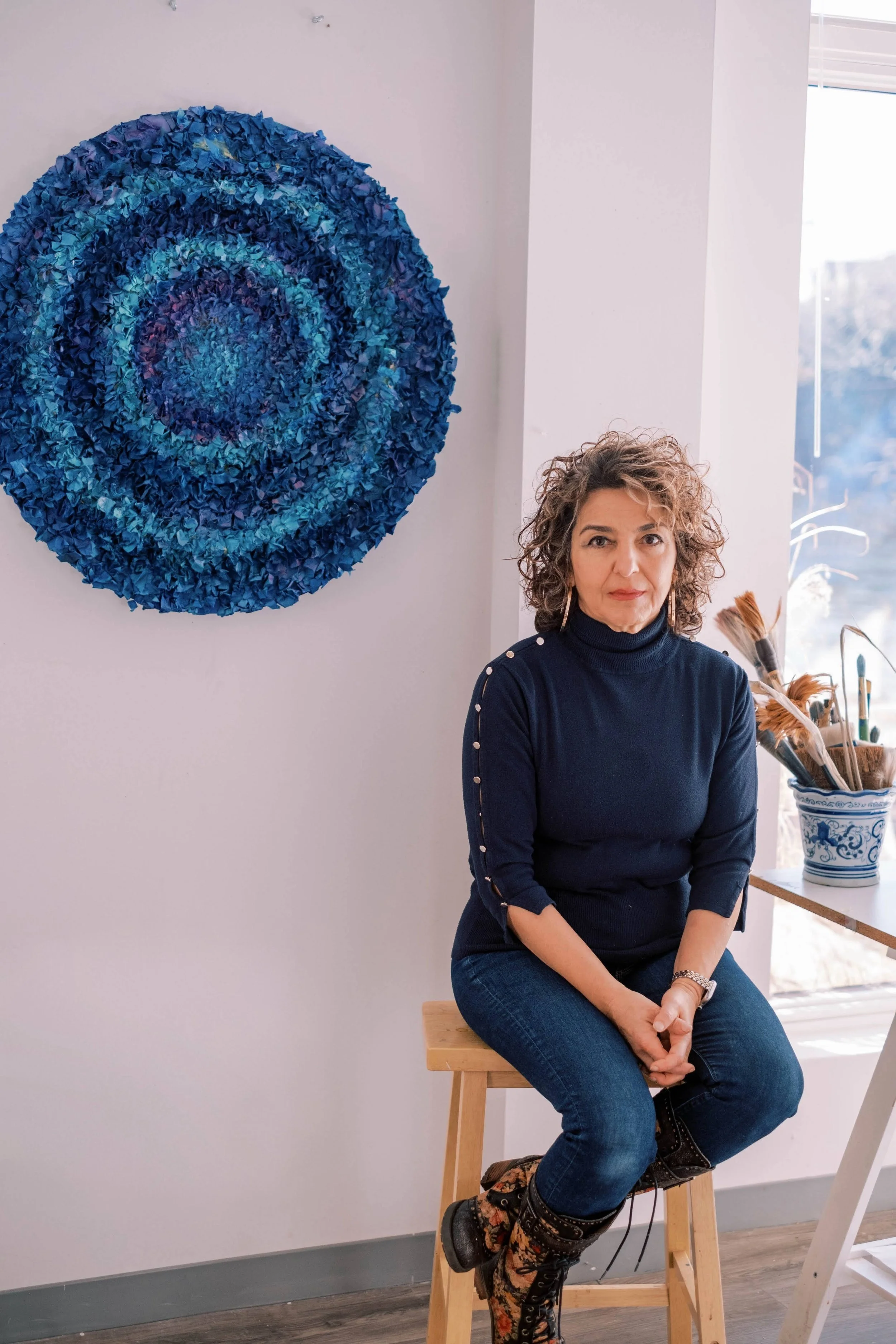
Saya Behnam
Saya Behnam is an Iranian-American artist with more than 20 years of experience in fine art. She lives in Virginia, and her studio is at Torpedo Factory Art Center in Alexandria, VA.
Her art practice is inspired by nature. She believes in and practices Biophilic Design, which recognizes how much human physical and mental well-being relies on the quality of our relationships with the natural world.
By using natural elements and inspiration from nature, she likes to juxtapose time and space, birth and death, and sacred or fractal geometry patterns observed in natural forms for the structures of growth, energy, decay, chaos, and order.
By creating her handmade colors and inks from minerals, fresh or dried flowers, spices, plants, earth stones, and other pigments —the medium intelligence, an essential aspect of her creative process—they aren't just mediums. Those are parts of places and time.
Furthermore, they produce different colors in response to weather, soil, and location. Since they are specific to the moment, time, and environment they were created, each is unique and can never be replicated.
They become singular visual aesthetic records of that unique location and time.
@sayabehnam | sbehnam.com
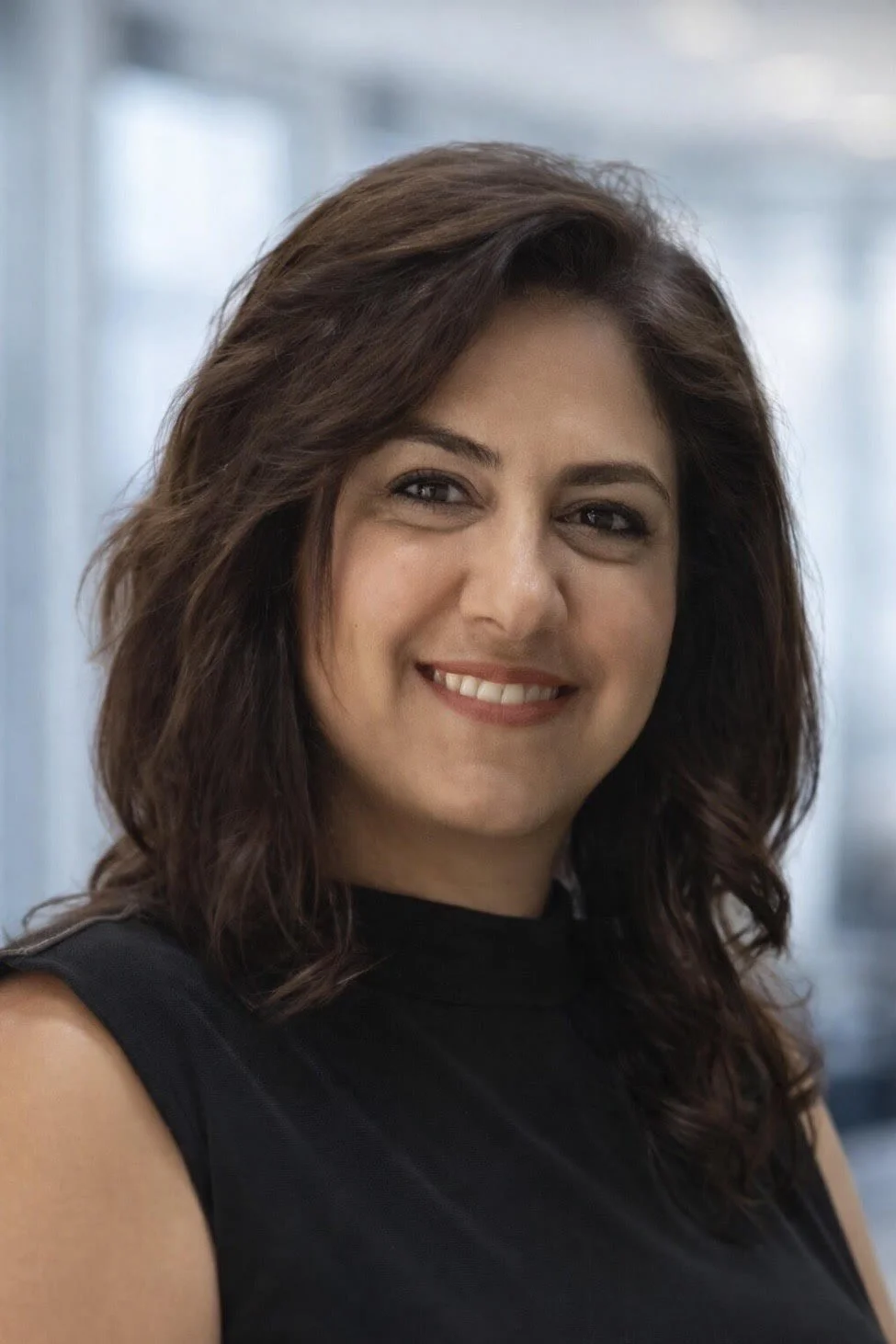
Sanam Ghandehari
Born and raised in Tehran, Iran, Sanam Ghandehari, is a New York-based attorney by profession and an artist by passion. Her deep love for Persian literature; especially the timeless verses of Rumi, Hafez, and Saadi; has always been a guiding force in her life. Blending her literary devotion with visual expression, Sanam creates contemporary Persian calligraphy that breathes new life into classical Persian poetry. Her artwork bridges tradition and modernity, capturing the rhythm of ancient verses through fluid forms and textured surfaces. In each piece, she explores themes of longing, mysticism, and the beauty of the Persian language, offering a visual experience that resonates across cultures and time.
@sanamart2025
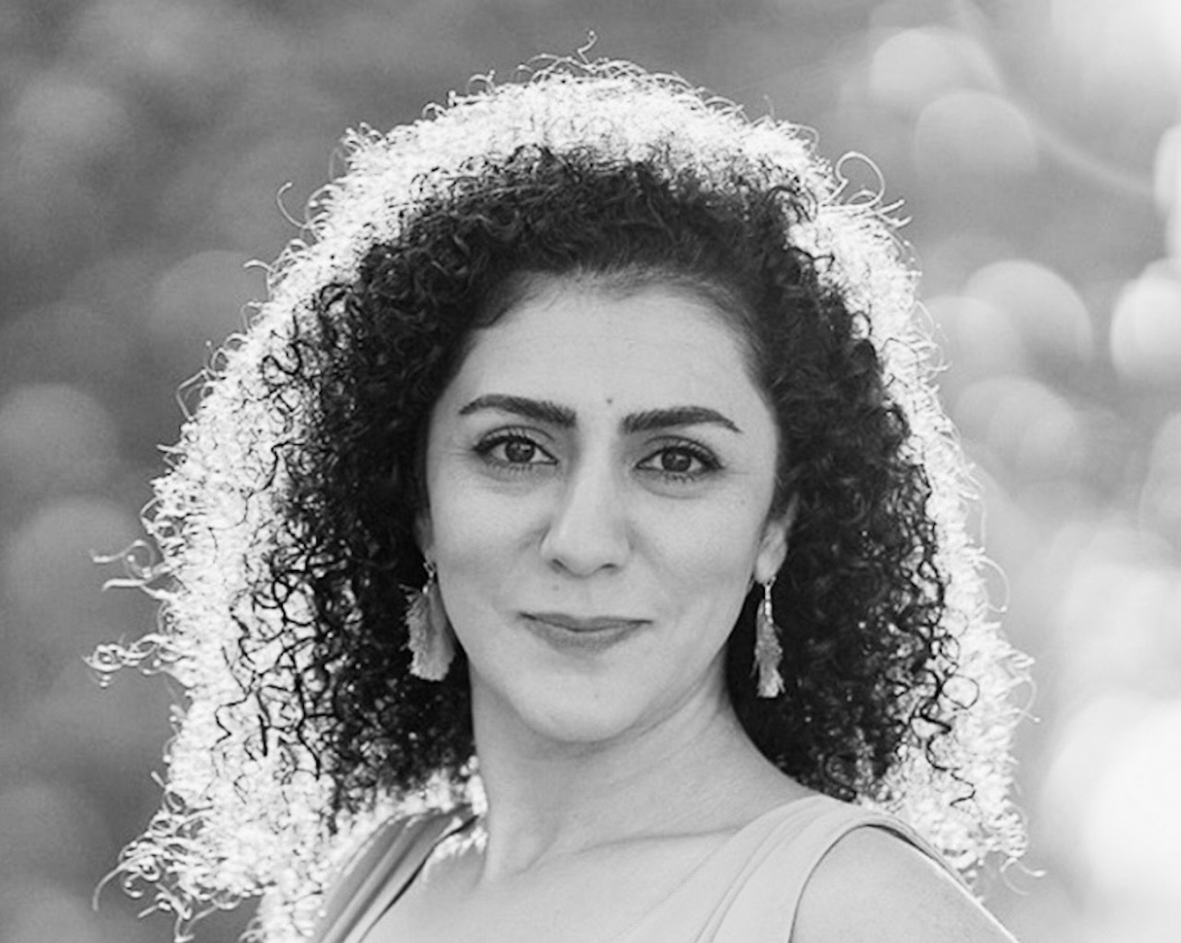
Nahid Boustani
Nahid Boustani a Persian-American artist who contributes her art to the arduous practice of staying present. Persian Calligraphy has been her family heritage and her main tool to share the spirit of art experienced in conscious presence. “There is a space where creation pours and it pours until we grow weary of receiving it. In this space, I express myself.” ~Nahid
"Lullabies" is a body of work on selected soothing and encouraging hymns dedicated to the days of resistance, the days of unity and hope, the days of the duet between the people inside Iran and those in the diaspora; rising like a phoenix, over and over, and claiming a homeland that belonged not only to their ancestors but also to their children to know to love and to flourish on its soil.
Nahid utilizes SiahMashgh (black rehearsal), a Persian calligraphy practice of unmeditated repetition of the phrase, to create an aesthetic representation against the white space. The words overlaid and sliding by one another embolden the flow of the artist’s state of mind; sweeping through the demands of the techniques of calligraphy. With SiahMashgh of these lullabies, Nahid hopes to add a layer of transformational beauty to the complexity of the feelings carried through the phrases.
@nahiduntold | nahiduntold.com
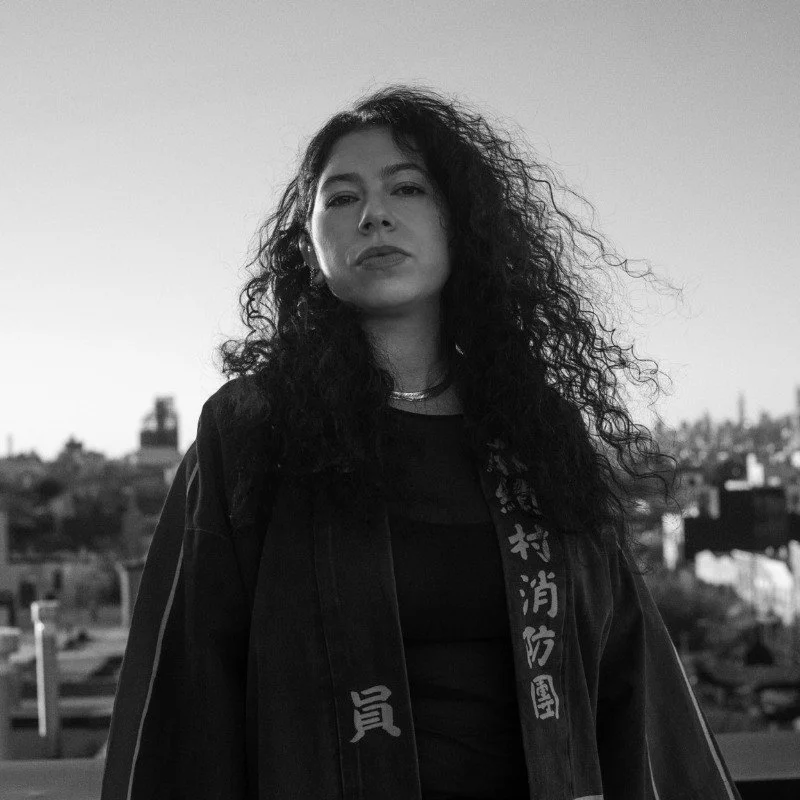
Alexandra Kaucher
Alexandra Tahereh Kaucher is a second generation Iranian immigrant who grew up in the United States. Kaucher’s video installation and film work primarily grapples with her cultural identity. She grew up with a second-hand account of Persian culture, relying on her mother’s descriptions. This has made getting in touch with her roots exceedingly difficult, as she feels like she is an outsider looking in. Her work is about charting her heritage, from the perspective of growing up in the Western world, and also from the perspective of Iranians, and the disparate place in between.
Through omnifarious media collage, pulled from both archival and contemporary media sources, she attempts to distill what Iranian culture permeates in a world ever expanding with global ideals in the internet age. She is interested in exploring feminism, consumerism, and decoding social standards in Western culture, and how that juxtaposes with her Persian heritage.
She is currently in pre-production of her film; Never Move Backwards is an intimate portrait of an all female parkour troupe in Tehran, Iran.
She directs and produces various films with her partner and collaborator under the moniker Hiss. She has directed a dozen short form pieces for the BBC in various countries in multiple languages as well as various short video art pieces. Kaucher made Ad Age's The List Generation Next 2022 and the Commercial Director's Diversity Program 2022.
Her directorial works have premiered at Cannes AVIFF, Atlanta Film Festival, Aesthetica, and Swedenborg film festival. Her work has been published on Nowness, and BOOOOOOOOM.
Her experimental video collage works Unrest in Iran, Utera, Haft Sin, & How to Cut a Pomegranate have shown at Woman Made Gallery in Chicago, The Holy Art Gallery, The New House Art Space & The Kato Wong gallery.