Zahra Nazari on Art, Architecture, and the Idea of Home
What first got you into art, and what drives you to continue?
Painting has been my creative outlet for as long as I can remember. Growing up in an ancient city in Iran, surrounded by history, architecture, and a family that valued art and culture, had a strong influence on my decision to pursue art.
I started studying painting seriously when I was fourteen. In that period, I was mostly painting still lifes and landscapes with oil, watercolor, and pencil. The work of European artists such as Auguste Rodin, Étienne Maurice Falconet, and Jean-Pierre-Antoine Tassaert had a big influence on me. I studied their work closely. I became fascinated by observing and rendering light, shadow, and texture. I was very patient with the details, especially when it came to capturing the way light fell across fabric, clothing, or a tabletop in a still life. I remember my teacher gave me the nickname of master of folds because of it. Later on, I majored in Fine Art for my undergrad studies in Tabriz, Iran. That is where I started to develop my own artistic style with some influences of surrealism, which was the topic of my thesis studies.
Between the ages of fourteen and twenty-four, I made around 300 paintings and drawings, most of which are still in Iran. Looking back, that period gave me a very strong foundation, but more importantly, it taught me how much I enjoy simply being in the process of making.
Painting has always given me a place to get lost in the process. I can become completely absorbed in the work, sometimes spending hours without realizing how much time has passed. That feeling of being fully present–of losing track of everything else while I’m painting–is still one of the things that keeps me coming back to it.
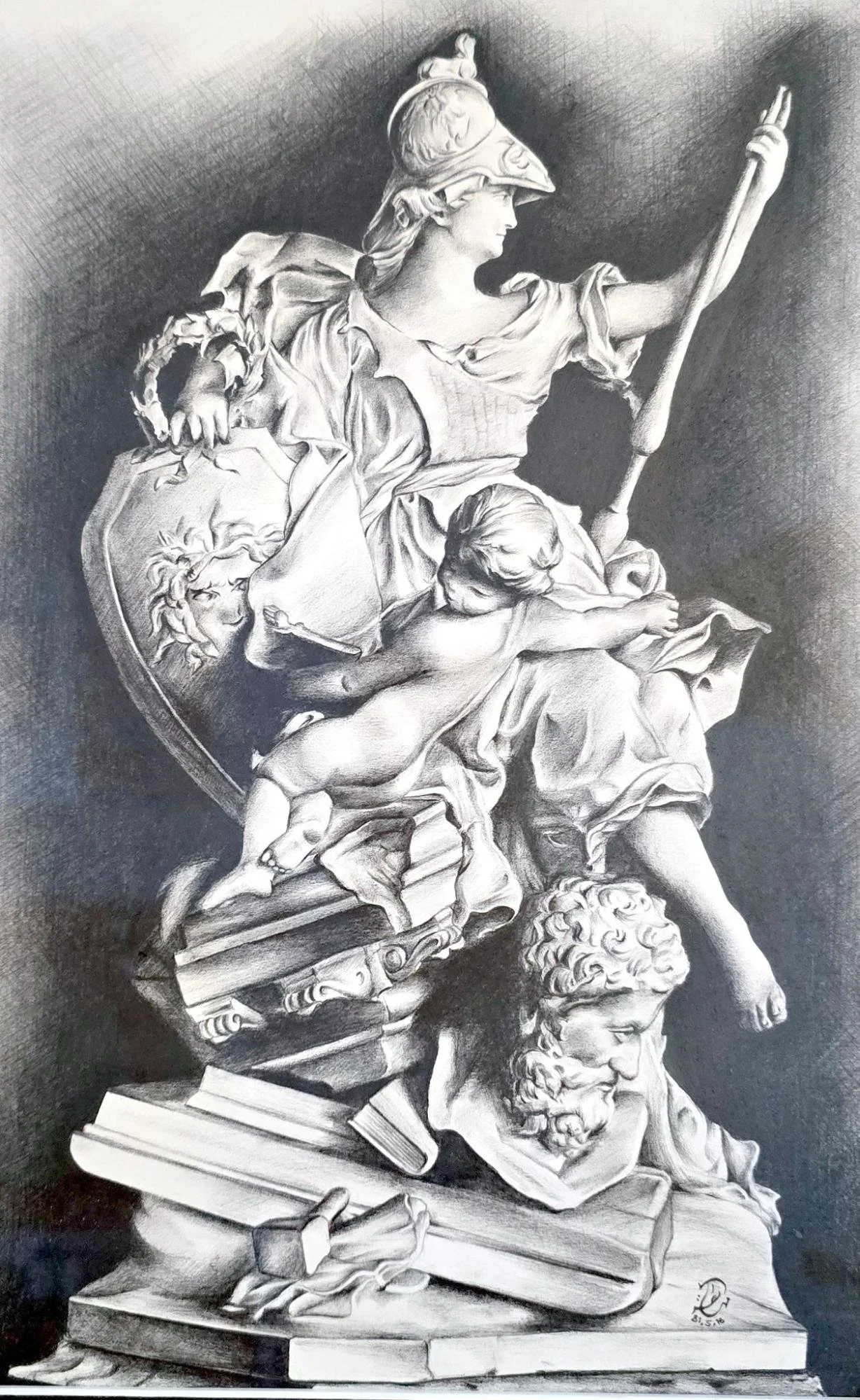
Zahra Nazari, pencil on paper, 16x12 in., 2002
Catherine the Great as Minerva, Marble Sculpture by TASSAERT, Jean-Pierre-Antoine
What inspires your art?
Architecture has been a major source of inspiration for me over the past nearly two decades, but I’m not interested in it simply as a visual subject. I’m interested in what architecture carries with it, the memories, histories, and stories that become attached to a place.
Why architecture? What do you think architecture can express about the human experience that other artistic forms cannot?
I think what fascinates me about architecture is that we experience it with our whole body. We don’t just look at a building - we enter it, move through it, live in it, and attach memories to it. A space can stay with you long after you’ve left it.
Architecture also carries so much about the people and cultures that create it. It can speak about power, religion, wealth, community, protection, or even exclusion. But at the same time, a building can become incredibly personal because of the memories we attach to it.
That is what I’m interested in exploring through my work. For me, architecture is a way of talking about things that go beyond architecture– memory, identity, displacement, and the idea of home.
In my paintings, I can take an architectural space apart and reconstruct it in a way that doesn’t necessarily make physical sense. I can change the scale, perspective, color, or relationship between different elements. That gives me the freedom to think about architecture as something remembered, imagined, or emotionally experienced rather than something fixed and purely physical.
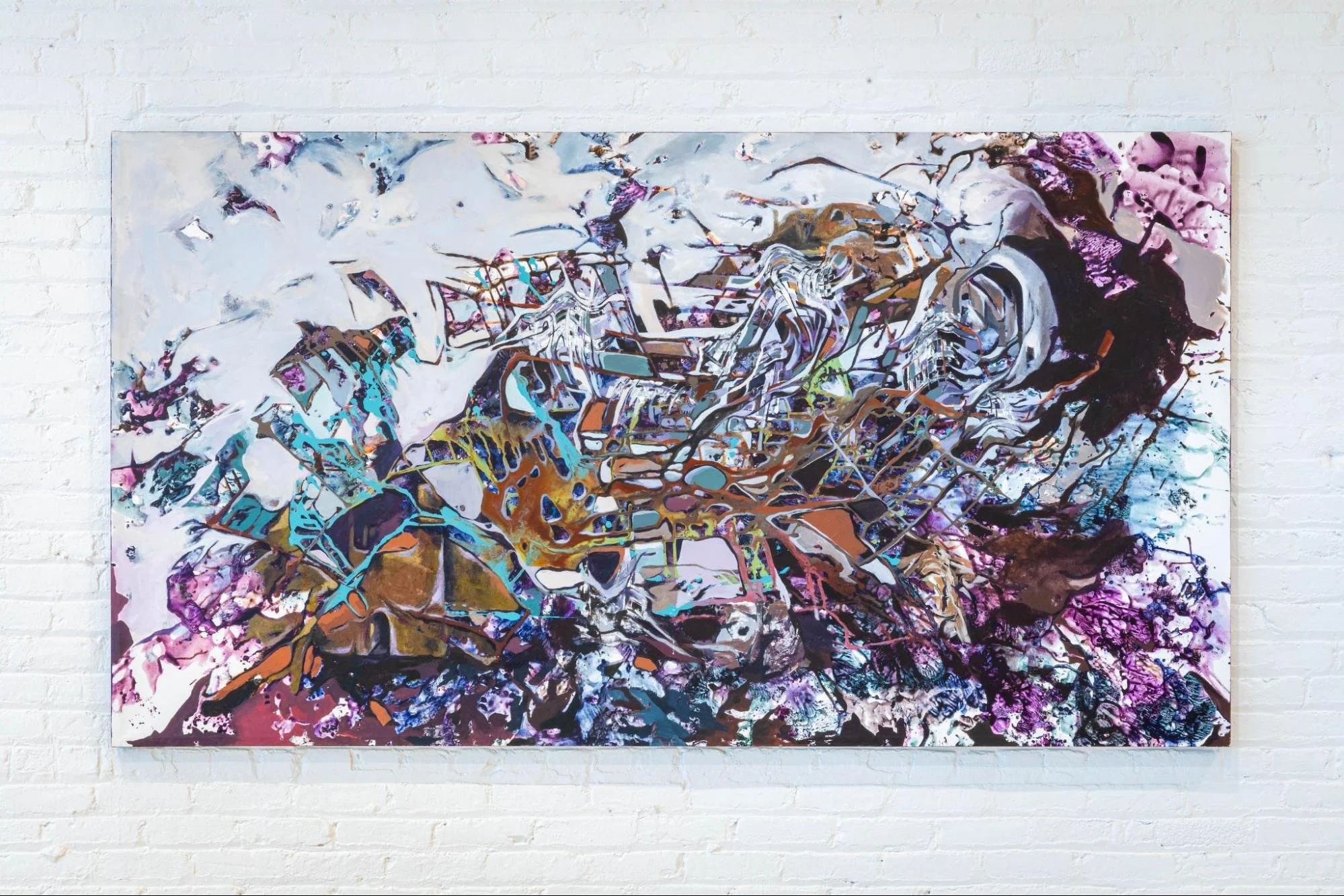
Landscape #18, acrylic on canvas, 53x94.5 in., 2012
You grew up surrounded by ancient Persian architecture and now live in one of the world's most architecturally and technologically dynamic cities. How has moving between these two environments changed your understanding of art, architecture, and what “home” can mean?
I grew up in Hamedan, one of the oldest continuously inhabited cities in Iran, surrounded by archaeological sites and historical architecture. Hegmataneh, for example, dates back to the first millennium BCE and was part of the landscape I grew up around. Being exposed to that kind of history and permanence from an early age left a strong impression on me. I think I became aware very early on of how much a place can hold and how architecture can connect the present to the past.
Living in New York has given me a completely different architectural environment to respond to. I’m surrounded by modern and postmodern buildings. Everything is constantly moving. Buildings are being constructed, renovated, demolished, and replaced. There is a sense of energy and acceleration everywhere, and I often find myself making unexpected connections between what I see here and the architecture I grew up with in Iran. Those connections, between very different places and time periods, have become an important part of how I look at architecture and how it enters my work.
Living between these two environments has changed the way I see architecture. One reminds me of what can survive for centuries, while the other reminds me that nothing is ever completely fixed.
At the same time, exploring architecture in New York has helped me feel more connected to the city and, in a strange way, more at home. I keep discovering details here that bring me back to things I remember from Iran, whether it is a shape, a pattern, a sense of light, or the way a space is organized.
I think my idea of home has changed because of this experience. It is no longer tied to one specific place. Home has become something I carry with me through memories, images, architecture, and the experiences that have shaped who I am.
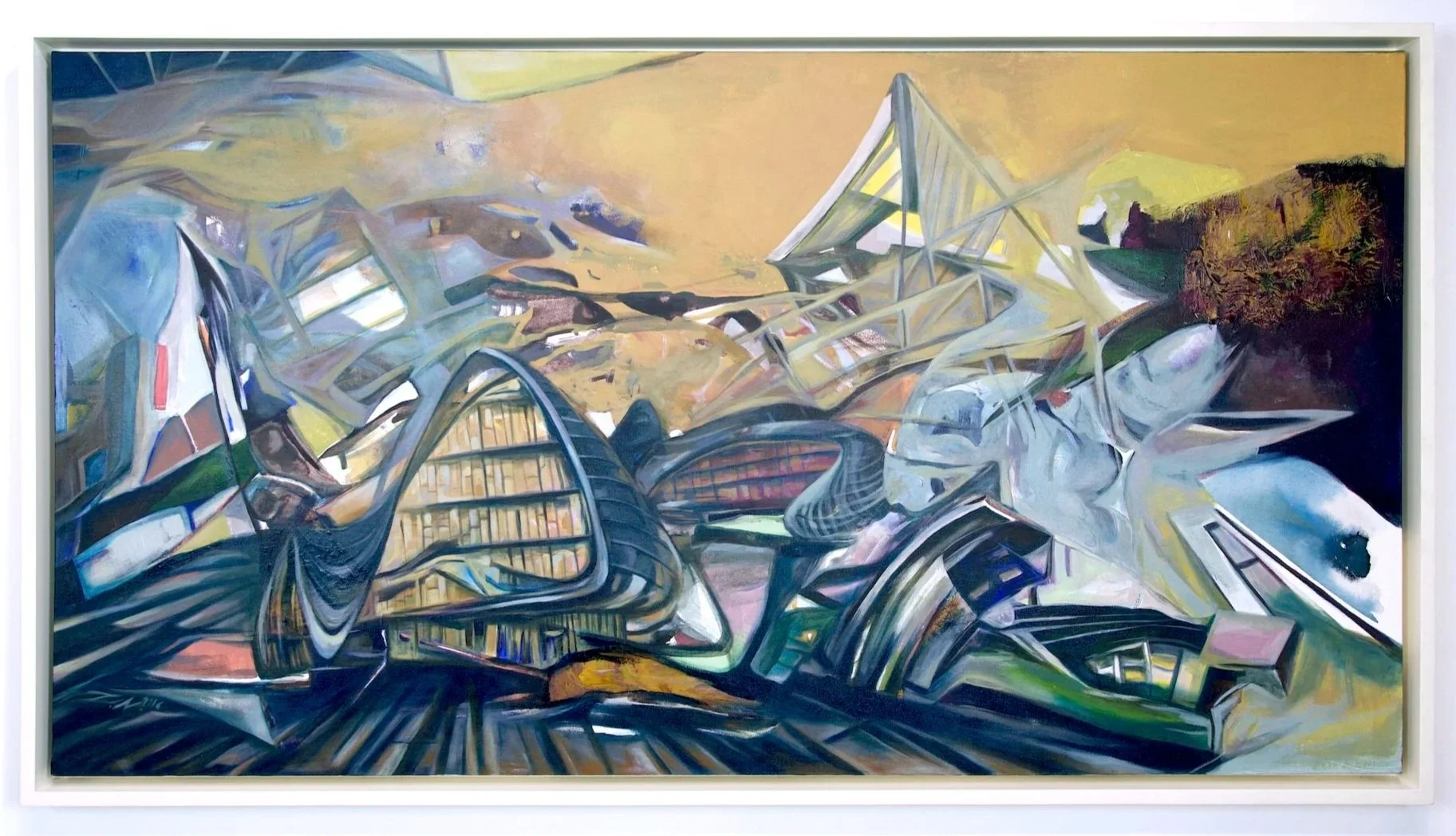
Urban Landscape, acrylic on canvas, 36.25x68 in., 2016
How would you describe your artistic practice? Can you walk us through your typical process from idea to finished piece? How do memory, improvisation, and imagination interact throughout your process?
Painting is my primary medium, and it is where most of my ideas begin. Over time, my practice has expanded into installation and sculpture, but architecture has always been at the center of how I think about my work, sometimes very directly and other times in a much more abstract way.
I often begin with architectural images and then transform them rather than simply reproducing what I see. I’m drawn to elements of Persian architecture such as arches, domes, niches, vaults, and geometric patterns, and I like bringing them into conversation with forms I encounter in Western and contemporary architecture. That combination feels very natural to me because it reflects the different places and visual languages that have shaped me.
In my paintings, I move between abstraction and representation. I might begin with loose, gestural movement and gradually introduce architectural forms or other recognizable elements. I like that tension between something that feels intuitive and something that can be identified. Color is also an important part of the process. I don’t always know the palette when I begin; it often develops as I respond to the emotion and energy of the painting.
Memory is always somewhere in the process, but I don’t think of my paintings as illustrations of specific memories. Memory is more like a starting point. I can alter it through imagination, and improvisation allows something unexpected to enter the work.
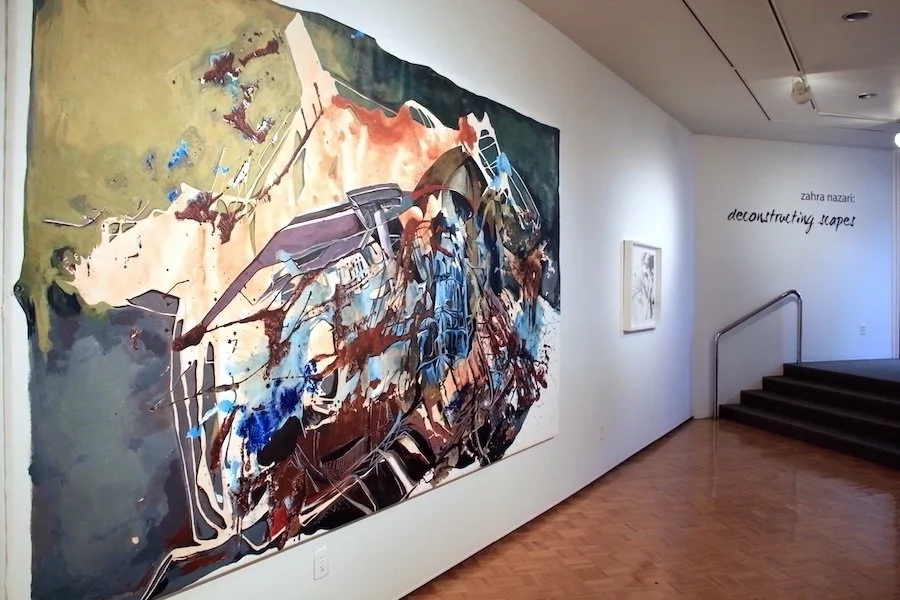
Cityscape Remix, acrylic on canvas, 83x141 in., 2012
Are there particular architectural spaces that you find yourself returning to in your artwork?
I often find myself returning to Persian architectural spaces, especially places where geometry, light, ornament, and movement come together. I’m interested not only in how these spaces look, but in how they make you feel and how they engage the body and the senses.
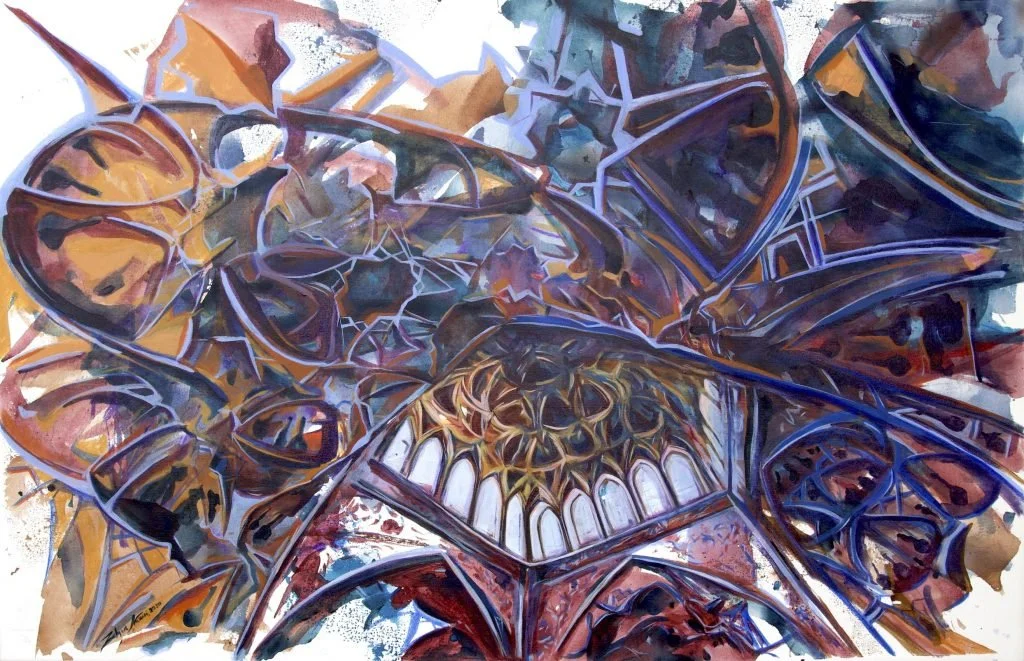
Ali Qapu Palace, acrylic on canvas, 35x55 in., 2020
One place I have returned to many times is the Music Room of Ali Qapu Palace in Isfahan. I’ve always been fascinated by its domes and muqarnas, but also by the relationship between the architecture and sound. The space was designed to enhance and resonate with music, so the architecture was doing more than creating a beautiful interior; it was actively shaping the experience of being there.
That idea became the starting point for my installation, Points of Departure. I used suspended architectural forms to create a sense of movement and levitation, thinking about how sound might move through the space and how I could translate that feeling into a visual and physical experience.
I also find myself looking at contemporary architecture in New York through this same lens. Sometimes I see unexpected connections between Persian architectural forms and very contemporary buildings, and those discoveries can become a starting point for my work. Hearst Tower is one of my favorite buildings in New York and was also an inspiration for Points of Departure. The use of water inside the building was a particularly interesting connection for me. It reminded me of the way water has been used in Persian architecture to shape atmosphere, movement, and the experience of a space.
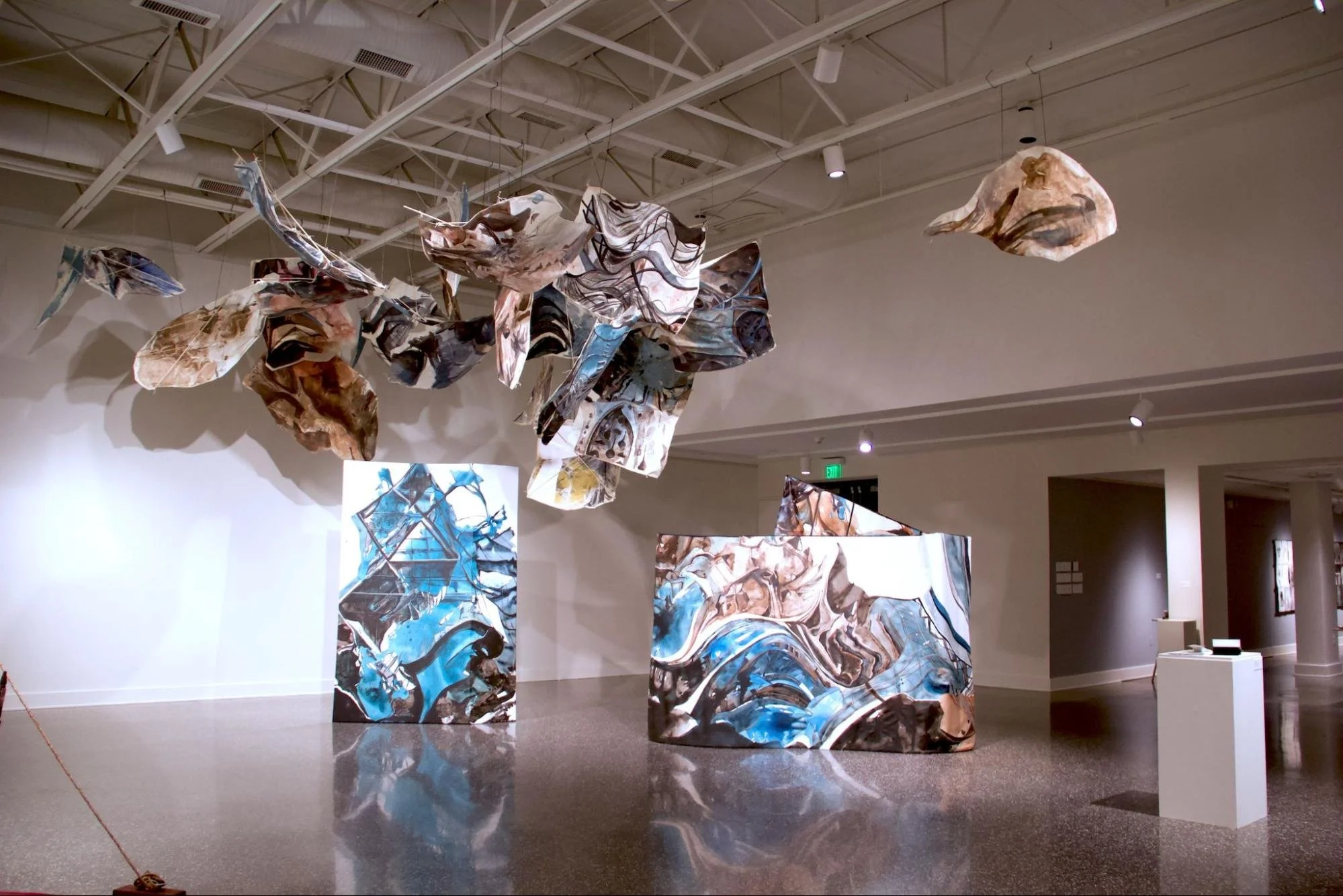
Points of Departure Installation, acrylic & ink on canvas and Asian paper,
29 architectonic kite forms & 2 shaped canvas structures
60×35 to 18×40 in. (suspended pieces) 100x73x30 & 73x 210x 30 in. (freestanding pieces)
How has your understanding of what it means to be Iranian changed since immigrating to the United States, and has that evolution appeared in your artwork?
I think I became more aware of being Iranian after I left Iran. When you are living in your own country, many things are simply part of your everyday life. After immigrating, you begin to recognize how much those things have shaped you. I became more interested in Persian architecture, history, patterns, and cultural traditions as I started looking at them from a distance.
There is also a feeling of being between places. You are physically somewhere else, but part of you is still connected to where you came from. Missing your homeland while worrying about what is happening there has made that feeling even more intense for me. Especially with recent events in Iran, which have opened up many old wounds. I don’t necessarily try to tell these stories literally in my paintings. Instead, they come through in ideas of fragmentation, memory, and reconstruction. This is also why I am drawn to combining architectural references from Iran with what I encounter in the United States. The work becomes a way of bringing these different experiences together. It is part of who I am and how I see the world around me.
What core emotions, messages, or stories do you want viewers to take away from your art?
I hope the work creates a feeling of curiosity, recognition, and connection. You may recognize an architectural form, but it may not be a place that actually exists.
A lot of my work comes from questions about home, memory, and belonging. But I don't necessarily want to explain those ideas to the viewer. I would rather create a space where they can have their own response.
For me, the emotional experience of the work is just as important as the story behind it.
Looking back on your career, is there a moment, exhibition, or artwork that is especially memorable to you?
Creating Unification at Sculpture Space in Utica during the pandemic is one of the experiences that I remember most strongly.
I had never worked with metal at that scale before, so I had to learn everything from cutting and welding to figuring out how to physically construct something I had only imagined. I spent two very intense months in the metal shop, often working eight to twelve hours a day. It was physically demanding, but I loved the process of learning through doing and seeing an idea slowly become a real, physical structure in front of me.
I was very fortunate to have the support of George Hendrickson, the Executive Director of Sculpture Space. He was incredibly generous with his knowledge and encouragement, and his support was a big part of helping me bring this dream project to life. I will forever be grateful for that time.
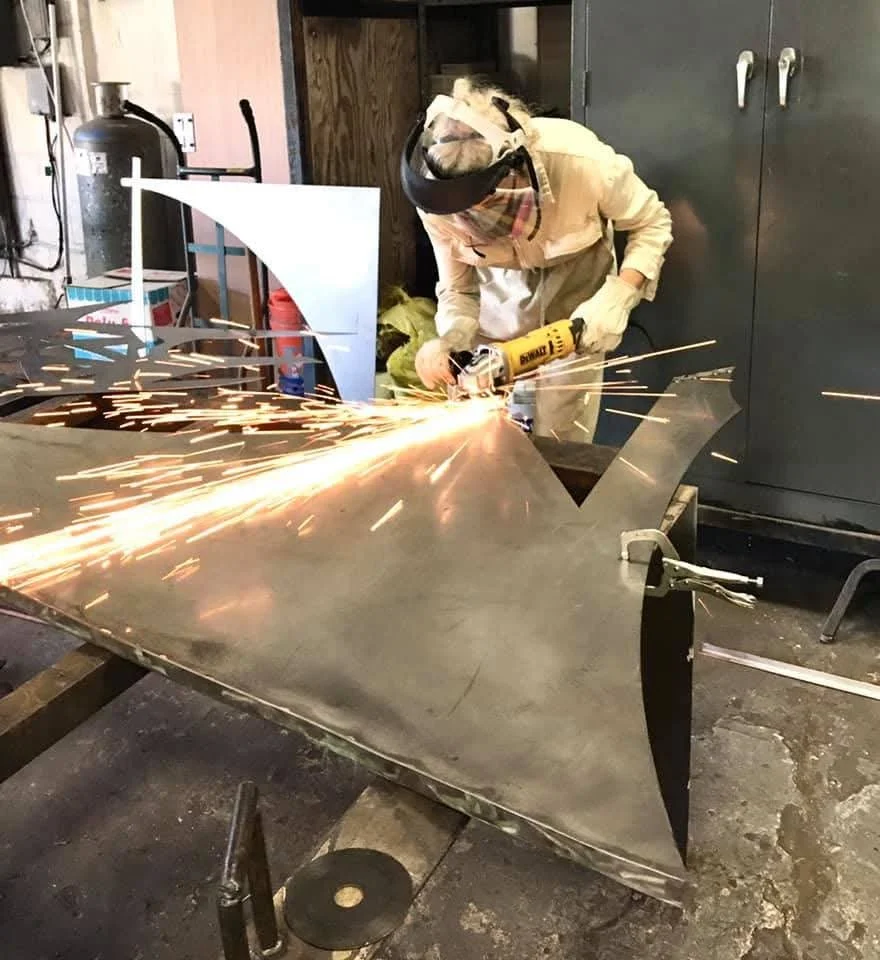
Zahra Nazari at Sculpture Space in Utica, 2020
The following year, I had a solo exhibition at High Line Nine Gallery, curated by the wonderful Roya Khadjavi, an art advisor and gallerist in New York who has been a great advocate for my work. She envisioned the exhibition right away during her studio visit. The exhibition, Unification, included paintings I had made in my studio based mainly on 17th Century Persian Architecture alongside the two sculptures I created at Sculpture Space with support from the Lower Manhattan Cultural Council (LMCC).
The Unification exhibition was reviewed in ArteFuse Magazine by the brilliant writer Michael Busch, who purely responded to the art without speaking to me or knowing me. That kind of connection and response was very valuable to me. I cherish that exhibition in my heart and am thankful to everyone who made it possible to this day.
Looking back, that period was important because it opened up a new way of thinking about my work. I was taking ideas that had existed primarily through painting and bringing them into physical space - thinking about form, scale, light, and how the viewer moves around the work. It expanded my understanding of what my paintings could become beyond the surface of the canvas.
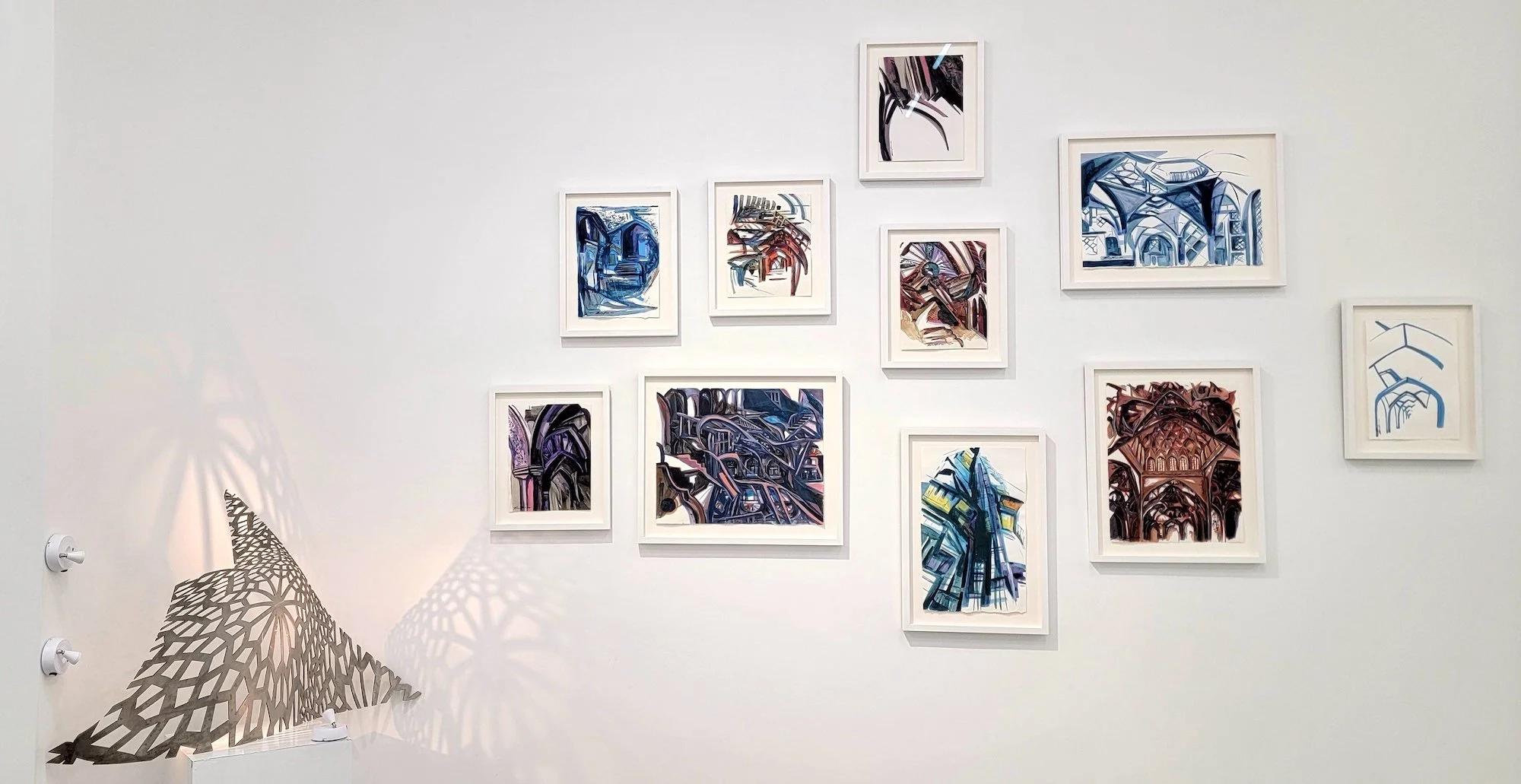
Patterns of Persia Sculpture, 12 gauge Stainless Steel, 25x48x11 in., 2020
Works on paper: acrylic on canvas, 18x22 in. - 15x10.5 in., 2020
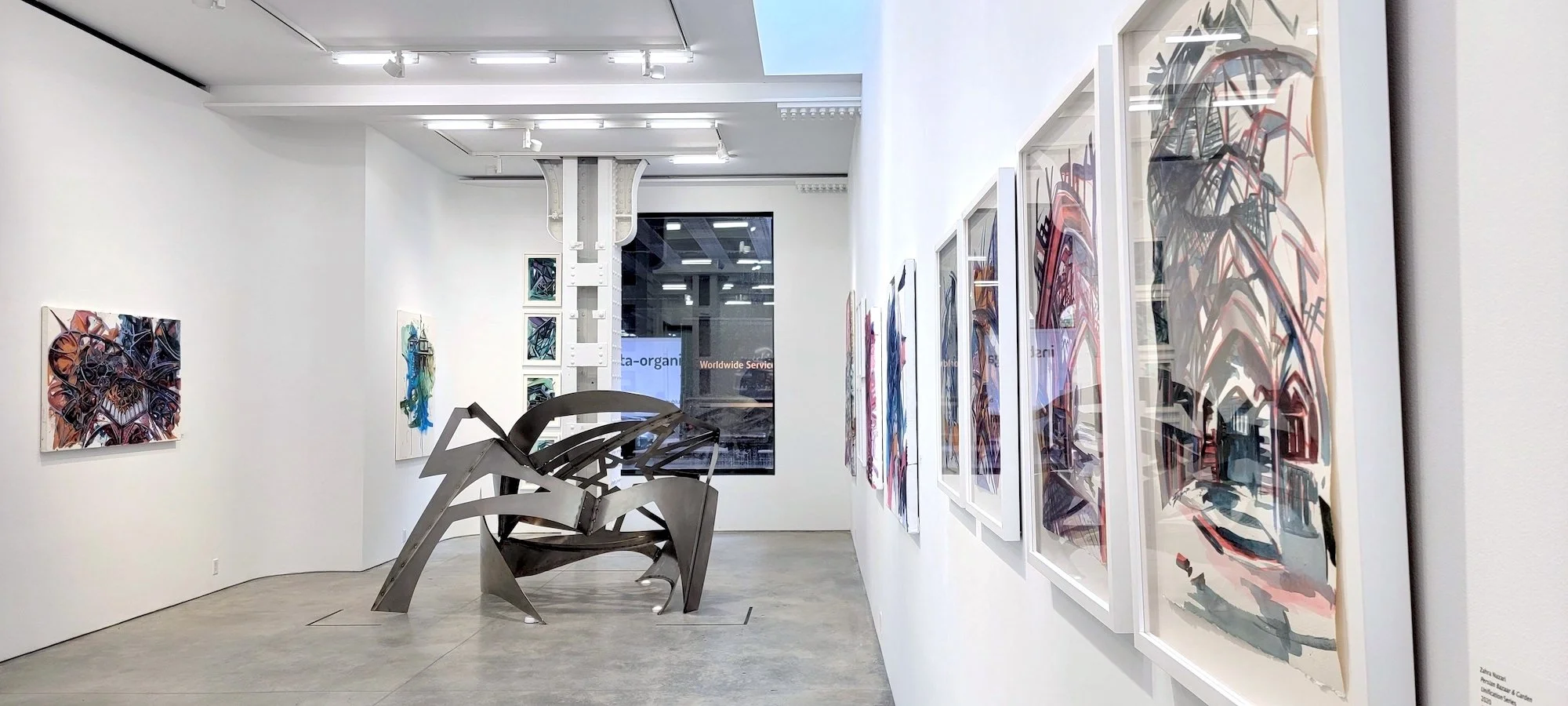
Unification Exhibition at Highline Nine Gallery, 2021
Unification Sculpture, 12 gauge Stainless Steel, 62x95x67 in., 2020
You became a mother recently. Has motherhood changed your artistic practice or the way you see your work?
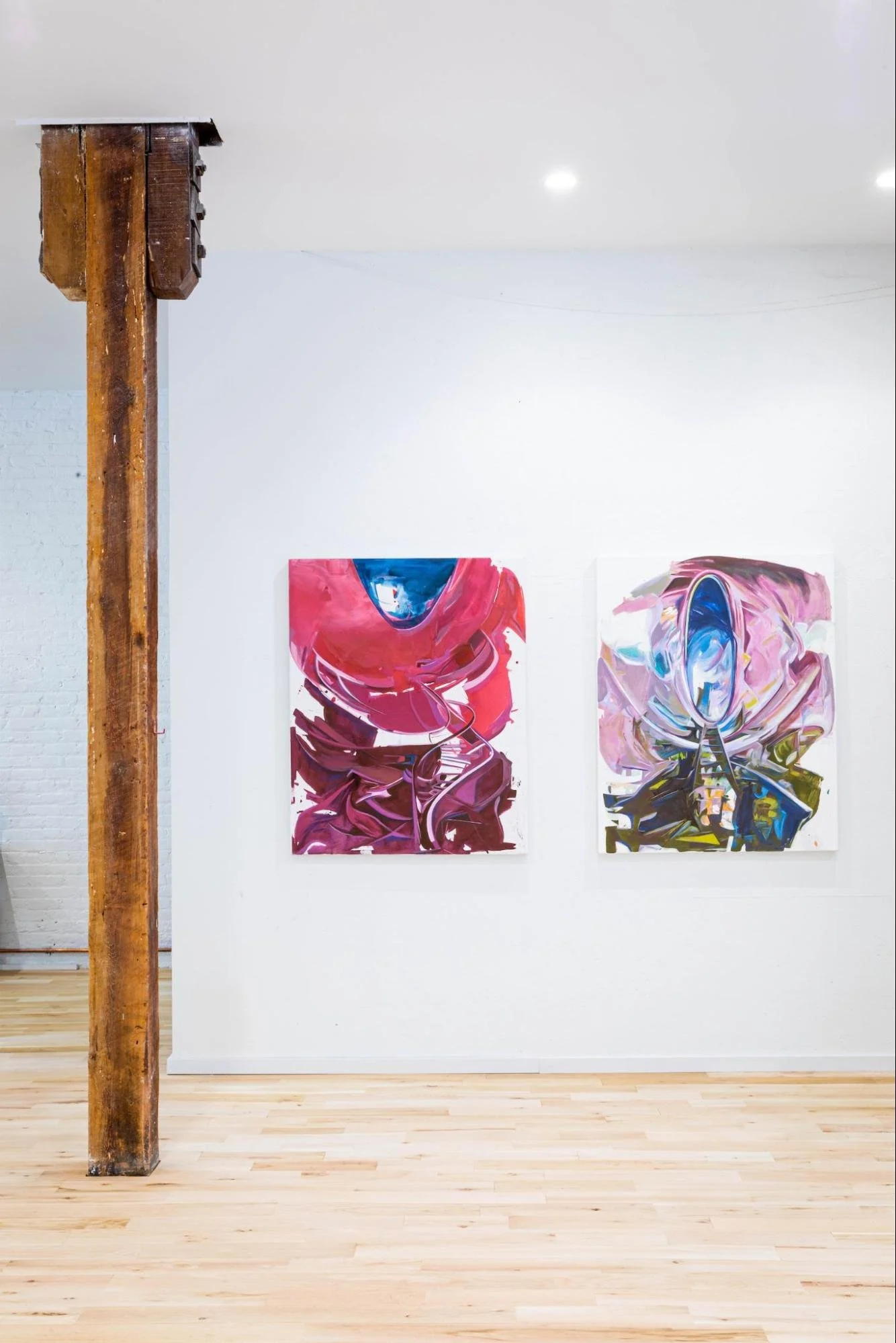
Becoming a mother has definitely changed my perspective, although I think that transformation had already started to find its way into my work in the years leading up to it. I intuitively became drawn to diptychs and to oval and circular formats, especially in the work I made between 2022 and 2024.
During that period, I was thinking a lot about transformation, growth, and the female body. I began translating those ideas into a series of interiors filled with curvatures and colors like deep red, purple, and pink. Looking back, I can see how much of that work was connected to psychological and physical changes, even before I became a mother myself.
Since my daughter was born, my speed has changed, and life itself is taking a larger part of my day. Now taking walks with her has become a big part of my everyday life. Therefore, photography has naturally become a more prominent and accessible way for me to stay creative and to collect images, moments, and ideas for a new series.
I have been very fortunate to have the support of my gallery and collectors throughout this sensitive and important chapter of my life. I made a conscious decision to be present for my daughter during these early years. For me, that has been just as meaningful as making my work. I know this time is fleeting, and I want to be there for her now, while also allowing my artistic practice to evolve naturally alongside this new part of my life.
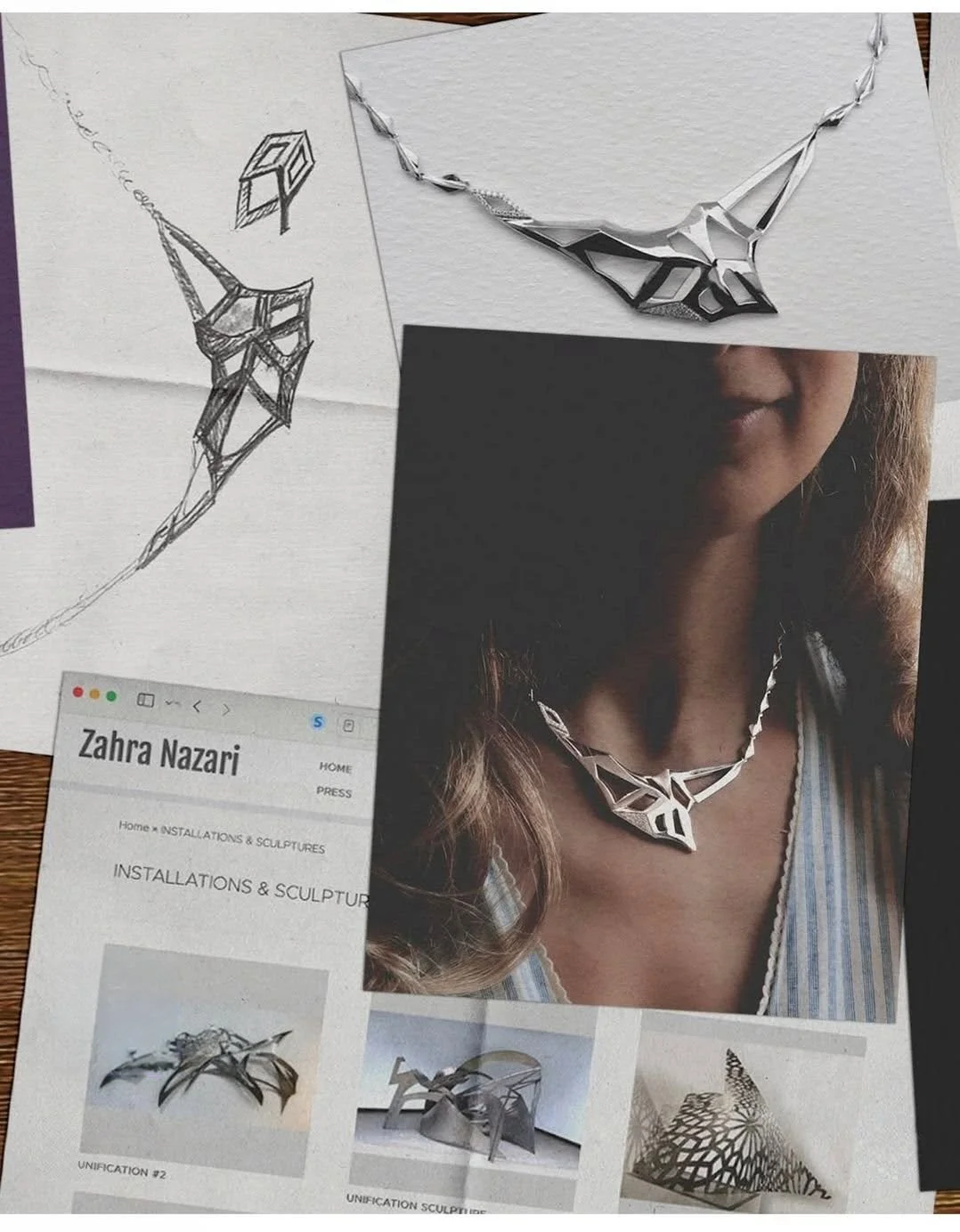
Last but not least, one exciting project I’ve been working on over the past few years is a collaboration with the wonderful team at Viya Jewelry here in New York. We had been developing the idea for a long time, and earlier this year, we finally released my first jewelry piece, a necklace. It was exciting for me to see my ideas move into such a different scale and medium while still feeling connected to my visual language as a painter.
We’re still working on another piece together, which I’m really looking forward to sharing soon.